The Cathedral, and the moment people actually remember
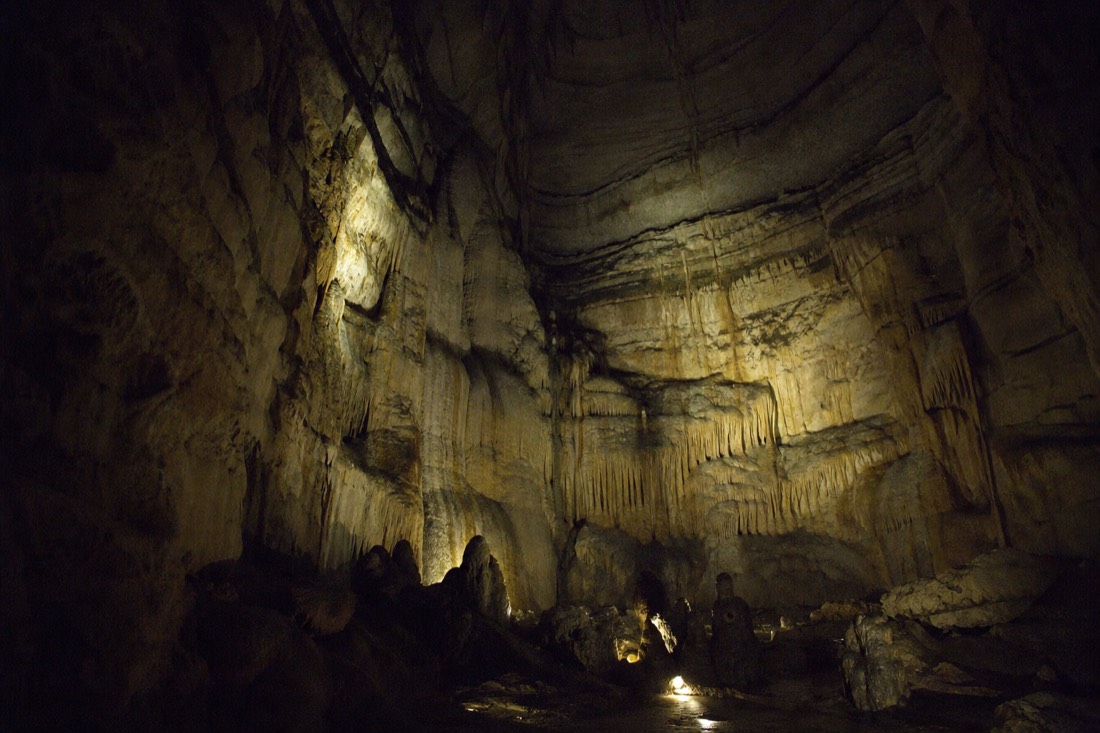
A domed chamber on the walking section with acoustics good enough that guides sing in it. Reviewers mention it more than the boat, which says something about the tour.
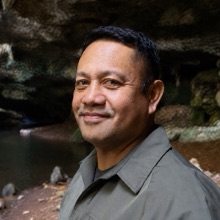 Written with Hemi Williams, Waitomo cave guide and local specialist, guiding since 2015
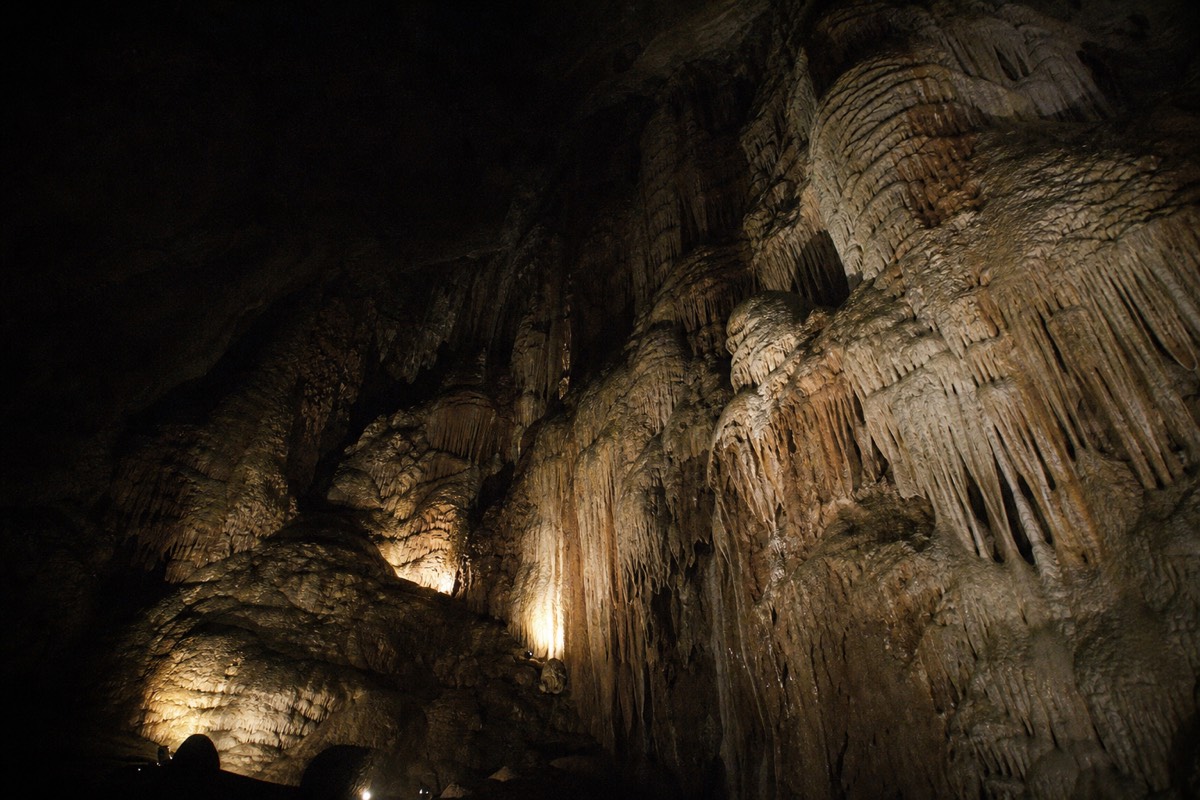
Read enough reviews of this tour and a pattern emerges that nobody puts on a poster. The boat gets described as magical. The Cathedral gets described by name, with the guide's name attached, and usually with what they sang.
What is the Cathedral at Waitomo?
A tall domed chamber on the dry walking section of the tour, before the descent to the boat. It is known for its acoustics, and guides sometimes sing in it. It sits on the lower of the cave's two levels, in a system holding about 1,300 metres of passages in limestone roughly 30 million years old.
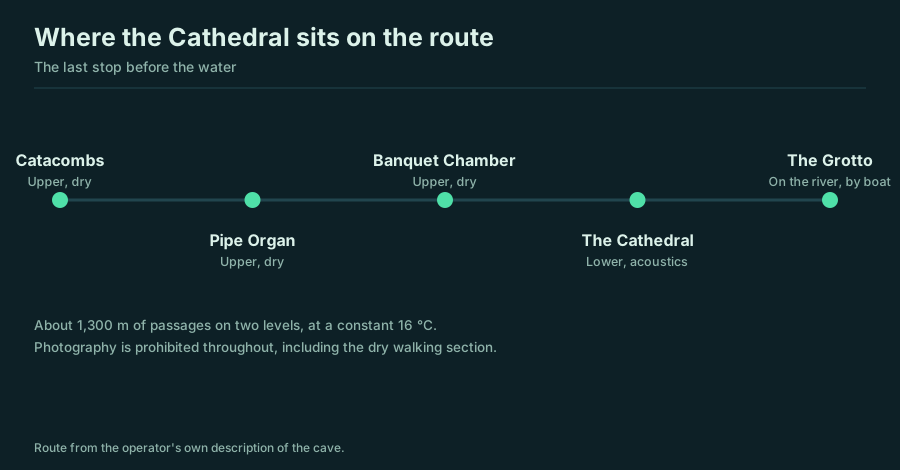
The operator's own description of the cave places it on the route between the dry upper chambers and the stream passages. It is the last thing before the water.
| Chamber | Level | What it is |
|---|---|---|
| The Catacombs | Upper, dry | The first section after the entrance |
| The Pipe Organ | Upper, dry | A fluted stone curtain resembling organ pipes |
| The Banquet Chamber | Upper, dry | Where nineteenth-century visitors ate underground |
| The Cathedral | Lower | The tall domed chamber, known for acoustics |
| The Glowworm Grotto | Lower, on the river | The boat section under the colony |
Why do reviewers mention it so much?
Because it is the part of the tour that surprises them. People book this tour for the glowworms. Nobody arrives expecting the walking section to produce the moment they write about afterwards, and a significant number of them do exactly that.
One wrote that her guide "sang a beautiful Maori song in the caves cathedral, its was so moving. We would absolutely recommend this tour!" Another, on a different day with a different guide, said she "loved when he sang and all the knowledge he had about the caves and the glow worms". Those are two separate visitors describing two separate guides, both singling out the same room.
That matters for how you should approach the tour. The most repeated complaint is that the glowworm section is short and the walk is long. The Cathedral is what the walk is for.
What is fixed about the chamber, and what depends on the day.
| Constant | Variable |
|---|---|
| The acoustics of a domed limestone chamber | Whether your guide sings |
| Its place on the route, before the boat | The size of your group |
| No photography permitted | How long the group lingers |
Is the singing guaranteed?
No, and it should not be presented as though it is. It depends on the guide, the group and the day. Some guides sing, some do not, and nothing in the product description promises it.
What is consistent is the acoustic property of the room, which is a matter of geometry rather than staffing. A tall domed chamber in limestone does what tall domed chambers in limestone do. Whether anyone uses it on your tour is luck.
The other consistent thing is who the guides are. Discover Waitomo states that some are descendants of Tāne Tinorau, the chief who first surveyed the cave by flax raft in 1887, and whose descendants had the caves returned to them in 1989. The commentary in the Cathedral is not a script being read.
Does it change how you should book?
It is an argument for not writing off the walking section, and for the early slot. A quieter tour means a smaller group in a chamber where acoustics are the point, and travellers report groups of around 23 with tours running back to back through the middle of the day.
Departures leave every 30 minutes from 9am to 5pm, so the choice is free. Which slots are quietest covers the pattern, and the guide to hours and departures has the schedule.
The 45-minute guided cave tour is the only one that includes both the Cathedral and the Grotto, and you can check live availability and prices on GetYourGuide with free cancellation up to 24 hours before.
How the two caves divide the time you spend underground.
| Glowworm Caves | Ruakuri | |
|---|---|---|
| Total underground | 45 minutes | 1 h 30 |
| Spent walking | Most of it | Over 1 km of it |
| Spent on water | 5 to 10 min, reported | None |
| Photography | Prohibited | Allowed, no flash |
What if you want more of the walking part?
Book Ruakuri as well, or instead. It runs 90 minutes and covers over a kilometre underground on a cave system 4.5 kilometres long, with photography allowed and step-free access by a spiral ramp. It has no equivalent of the Grotto boat, but it has considerably more cave.
The two together make a good half day: the Grotto in the morning, the long walk in the afternoon. Both need about three and a half hours on site combined, and Ruakuri needs your own transport from the village. The full comparison sets out who should book which, and how long you need at Waitomo covers the shapes of the day.
If you only have 45 minutes, though, the Cathedral is already in it. The mistake is treating the walk as the queue for the boat.
Which other Waitomo caves have a signature chamber?
Each of the three has one, and they are doing different things. If the Cathedral is the reason you would take the walking section seriously, the other caves have equivalents worth knowing about.
| Cave | Signature feature | What it is |
|---|---|---|
| Waitomo Glowworm Caves | The Cathedral, then the Grotto | Acoustics, then the glowworm ceiling |
| Ruakuri | The spiral entrance ramp | A drum-shaped shaft descending into the cave |
| Aranui | Its formations | The finest stone in the district, and no glowworms |
Aranui is the one people skip and the one a formations enthusiast should book. It has no water, therefore no glowworms, therefore fewer visitors, and it holds an hour of the best limestone at Waitomo.
Why do acoustics work like that in a cave?
Hard, curved, non-parallel surfaces and no soft material anywhere. A domed limestone chamber reflects sound instead of absorbing it, and the curve spreads those reflections rather than bouncing them back as a slap echo.
| Property | Effect |
|---|---|
| Hard stone surfaces | Very little absorption; sound persists |
| Domed and curved geometry | Reflections diffuse rather than returning flat |
| No furnishings or soft material | Nothing to damp the upper frequencies |
| Enclosed volume | A long reverberation tail |
| A group standing still and silent | You actually hear it |
The last row is doing real work. The room's properties are constant; whether anyone notices depends on whether the group is quiet, which is one more argument for a departure slot at the quiet end of the day.
What is the Cathedral in the Waitomo caves?
A tall domed chamber on the walking section of the tour, before the descent to the boat, known for its acoustics. It sits on the lower of the cave's two levels, past the Catacombs, the Pipe Organ and the Banquet Chamber.
Do the guides really sing in it?
Some do. It is not guaranteed and it is not part of the advertised product, but it appears repeatedly in reviews, with different visitors describing different guides on different days. The acoustics of the room are a constant; whether anyone uses them is not.
Is the walking section worth the time?
Reviewers who arrived expecting only glowworms frequently say the Cathedral was the part they remember. Given that the boat section runs five to ten minutes of the 45, treating the walk as filler means writing off most of what you paid for.
Can you photograph the Cathedral?
No. Photography is prohibited throughout the Waitomo Glowworm Cave, including the dry walking section. Ruakuri and Aranui both allow non-flash photography if capturing cave interiors matters to you.
Which other chambers are on the tour?
The Catacombs, the Pipe Organ, where a fluted stone curtain resembles organ pipes, and the Banquet Chamber, named for the meals nineteenth-century visitors ate there. All three sit on the dry upper level before the Cathedral and the descent to the river.