What to wear inside the caves
Sixteen degrees, damp underfoot, and nothing that takes a photograph. The whole packing list is a jacket and shoes with grip, and here is why the season does not change it.
 Written with Hemi Williams, Waitomo cave guide and local specialist, guiding since 2015
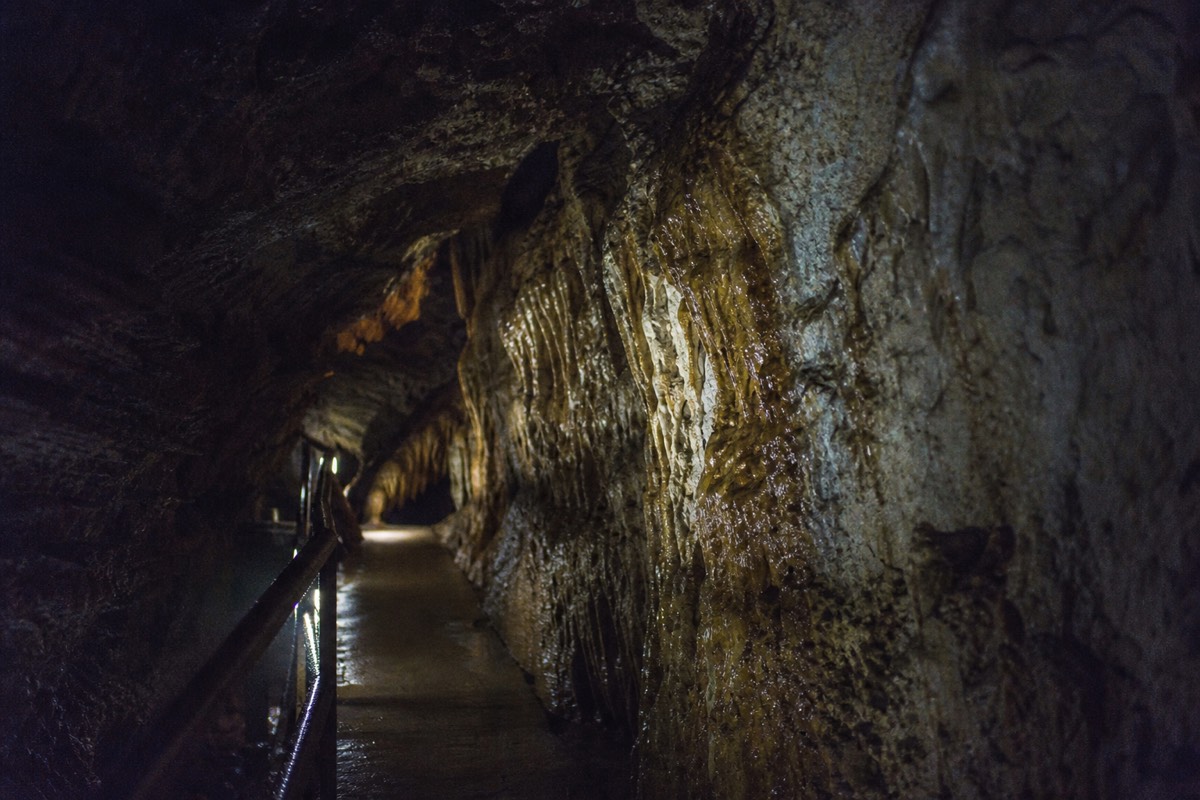
People overthink this one, mostly because they are picturing a New Zealand season rather than a cave. Whatever the weather is doing outside is irrelevant about fifteen steps in. The cave has one temperature, all year, and it is not the temperature you dressed for.
What should you wear in the Waitomo Glowworm Caves?
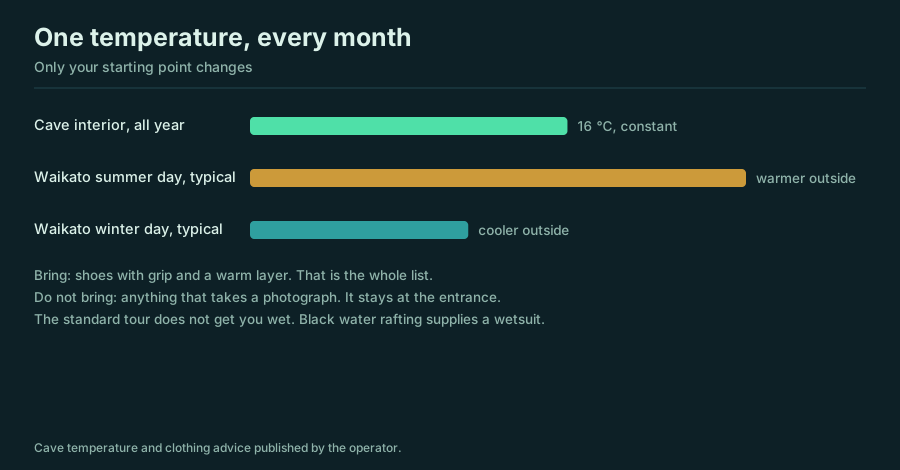
Comfortable walking shoes with grip and a warm layer or a jacket. That is the entire list. The cave holds a constant 16 °C year round, the paths are damp in places, and nothing else you own will make a difference to the 45 minutes.
Sixteen degrees is the number to plan against, and the operator's own advice is exactly that: comfortable walking shoes and a warm jacket. In a New Zealand summer, walking in from 26 °C, it reads as cold. In July, walking in from 8 °C, it reads as mild. Same cave, opposite reactions, which is why the advice is a layer rather than a coat.
| Item | Bring it? | Why |
|---|---|---|
| Warm layer or light jacket | Yes | Constant 16 °C feels cool after a summer day |
| Shoes with grip | Yes | Formed paths, damp in places, stairs throughout |
| Waterproofs | No | The standard tour does not get you wet |
| Camera or phone | Not inside | Prohibited; left at the entrance |
| Bag | Leave it at the entrance | Simpler than carrying it down |
| Torch | No | The lighting is deliberate, and darkness is the point |
Does the season change anything?
No, and this is the most commonly over-planned detail of a Waitomo visit. The cave temperature does not move with the calendar, the glowworms do not have a season, and the tour runs daily in any weather. What changes seasonally is the crowd and the drive, not the packing.
The one genuine seasonal consideration is above ground. Winter in the Waikato means wet roads and short daylight rather than snow, so if you are driving 202 kilometres from Auckland in July, plan for a dark trip home. The best time to visit works through the crowd side of that, and what happens in the rain covers the wet-weather question.
| Month | What you wear underground | What changes above ground |
|---|---|---|
| December to February | Light jacket | Peak crowds, long daylight |
| March to May | Light jacket | Easing crowds, wetter roads |
| June to August | Light jacket | Quietest, short daylight, wet |
| September to November | Light jacket | Building crowds, spring rain |
What can you not take in?
Anything that takes a photograph. Cameras, phones, video and GoPros are all prohibited inside the Waitomo Glowworm Cave and are left at the entrance rather than politely discouraged inside. Ruakuri and Aranui both allow non-flash photography, which is the tell that this is a colony-management rule rather than a blanket policy. The full explanation of the ban goes into what light does to a glowworm.
The practical consequence is that you should not walk in loaded with valuables. Bags go on a shelf. It also means you should build a little more buffer into your arrival than you would for a normal attraction: the handover takes time when a whole group arrives at once, which is part of why 90 minutes on site is realistic for a 45-minute tour.
If it is the Grotto you want, the 45-minute guided cave tour is the only one that includes it, and you can check live availability and prices on GetYourGuide with free cancellation up to 24 hours before.
For a family or a mixed group, the footwear question matters more than the jacket.
| Visitor | Priority | Why |
|---|---|---|
| Small children | Grip on the soles | Damp formed paths and stairs throughout |
| Anyone unsteady on steps | Grip and a free hand for the rail | No step-free route in this cave |
| Wheelchair or pushchair user | Book Ruakuri instead | Spiral ramp, chairs to 65 cm |
| Everyone | One warm layer | A constant 16 °C in every month |
Is the standard tour wet?
No. You stay dry. The boat section runs on the underground Waitomo River but you sit in the boat, and the walking section is on formed paths. Damp underfoot is not the same as wet, and no waterproofs are needed.
The tour that does get you wet is a different product entirely. Black water rafting puts you in an inner tube on a cold underground stream for three to five hours, and there the operator supplies a wetsuit, boots, helmet and tube because you will need all four. The comparison between the two covers the requirements, including the minimum ages of 12 and 16 and a 45-kilogram minimum weight.
What about children and older visitors?
Same clothing, different footwear priority. The stairs are the constraint, not the temperature. Grip matters more for anyone unsteady, and a child in smooth-soled shoes on a damp formed path is the most likely small mishap of the day.
The Glowworm Cave is described by the operator as suiting visitors with reasonable mobility, with good handrails and formed paths throughout, and it is not wheelchair or pushchair accessible. If anyone in your party needs a step-free route, Ruakuri is entered by a spiral ramp and takes chairs and pushchairs up to 65 centimetres wide. The access guide sets that out properly, and visiting with kids covers the rest of the family question.
What do you need for the other Waitomo tours?
The kit list changes completely once you leave the walking tours. For the three cave walks it is shoes and a layer. For anything in the water, the operator supplies the kit and you supply the willingness to get cold.
| Tour | What you bring | What is supplied |
|---|---|---|
| Glowworm Caves, 45 min | Shoes with grip, a warm layer | Nothing needed |
| Ruakuri, 1 h 30 | Shoes with grip, a warm layer, a camera | Nothing needed |
| Aranui, 1 h | Shoes with grip, a warm layer, a camera | Nothing needed |
| Small-group private cave tours | Shoes you do not mind getting muddy | Varies; check the listing |
| Black Labyrinth rafting | Swimwear, towel, dry change of clothes | Wetsuit, boots, helmet, tube |
The most common packing mistake across all of them is footwear rather than warmth. Sixteen degrees is manageable in almost anything; a damp formed path in smooth-soled shoes is not.
Does anything need to be left behind?
Everything that takes a photograph, and it is enforced at the door rather than requested inside. This is the single most common surprise at the Glowworm Cave, and it is worth arriving prepared for rather than discovering at the shelf.
| Item | Glowworm Cave | Ruakuri and Aranui |
|---|---|---|
| Phone | Left at the entrance | Permitted |
| Camera | Left at the entrance | Permitted, no flash |
| Video or GoPro | Left at the entrance | Permitted |
| Bag | Simpler to leave it | Permitted |
| Pushchair | Not possible, stairs | Ruakuri takes them to 65 cm |
| Tripod | Not applicable | Impractical on a moving tour |
Leaving your phone in the car rather than in your pocket genuinely speeds up the handover, which matters when a full group is doing the same thing at once.
What about children and older visitors specifically?
The clothing is identical; the footwear and the stairs are not. The Glowworm Cave has stairs throughout with handrails and formed paths, and the operator describes it as suiting visitors with reasonable mobility.
| Visitor | The real constraint |
|---|---|
| Small children | Grip on damp steps, and the dark on the boat |
| Anyone unsteady on stairs | No step-free route; Ruakuri is the alternative |
| Wheelchair or pushchair users | Ruakuri only, chairs to 65 cm via the spiral ramp |
| Anyone cold-sensitive | 16 °C feels colder after a warm day; bring the layer |
| Anyone claustrophobic | The passages are formed and lit, but they are passages |
That last row rarely appears in packing advice and matters more than most of the rest. The walking section is lit and comfortable; the boat runs in complete darkness in silence, which is the point and is not for everyone.
Why does 16 degrees feel so different by season?
Because you are not measuring the cave, you are measuring the change. Sixteen degrees walking in from a 26-degree summer afternoon is a ten-degree drop onto skin that has been warm all day. The same sixteen degrees walking in from a nine-degree winter morning feels mild.
| Outside | Inside | How it reads |
|---|---|---|
| ~26 °C, summer afternoon | 16 °C | Distinctly cold for the first few minutes |
| ~20 °C, spring or autumn | 16 °C | Barely noticeable |
| ~12 °C, winter day | 16 °C | Mild, occasionally warmer than outside |
| Any of the above, sitting still on the boat | 16 °C | Colder again; you stop generating heat |
That last row is the one people miss. The walking section keeps you warm; the boat does not, and it is the part where you sit still in the dark for several minutes. A layer you can put on before the descent is worth more than a heavier coat you carry.
What about the humidity?
High enough that everything feels damp and nothing dries. A cave carved by a river that still runs through it holds moisture, and the practical effects are small but real.
| Effect | What to do about it |
|---|---|
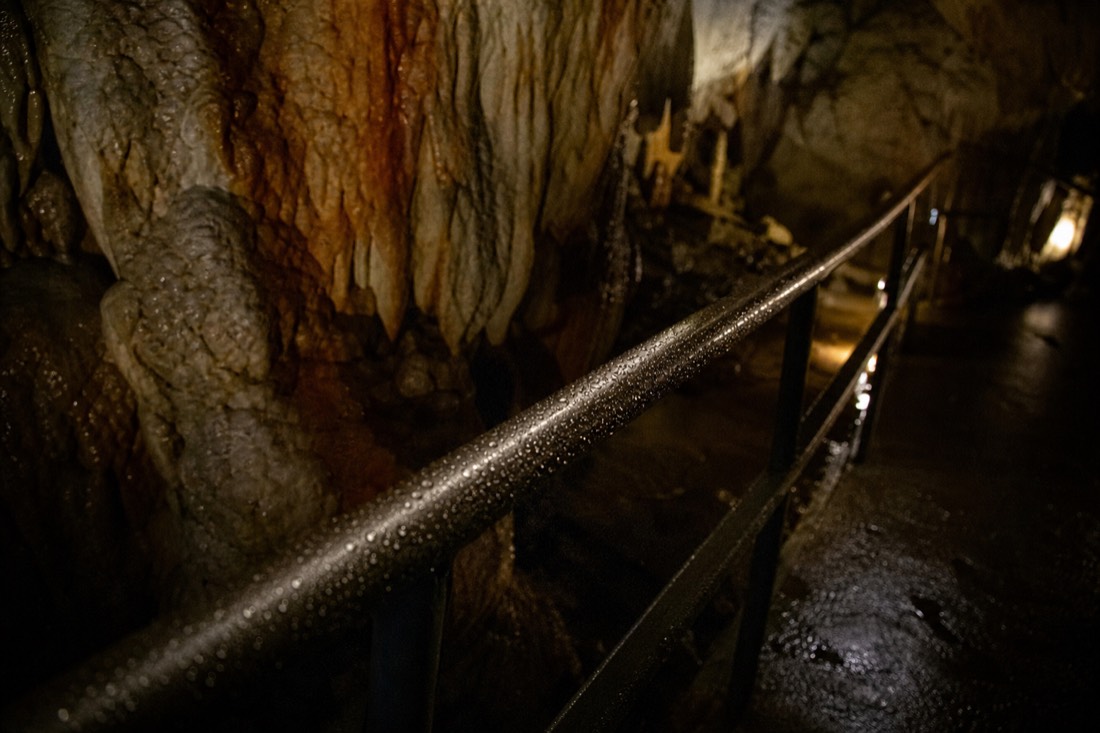
| Handrails and steps beaded with water | Wear grip, and use the rail |
| Glasses fogging on entry | Give them a minute; do not wipe with a wet sleeve |
| Cotton staying damp | A synthetic or wool layer beats a cotton hoodie |
| Camera lenses, at Ruakuri | Let gear acclimatise before shooting |
| Hair and clothes afterwards | Nothing; 45 minutes is not long enough to matter |
None of this rises to the level of special equipment. It is the difference between comfortable and slightly clammy, and one non-cotton layer resolves most of it.
How cold is it inside the Waitomo caves?
A constant 16 °C, year round. That feels cool walking in from a New Zealand summer day and mild walking in from a winter one, which is why a single warm layer is the right answer in any month rather than a coat or a t-shirt.
Do you need waterproof clothing?
Not for the standard 45-minute tour. You stay dry, sitting in the boat for the Grotto section and walking formed paths for the rest. Waterproofs only matter for black water rafting, and there the operator supplies a full wetsuit anyway.
What shoes should you wear?
Anything comfortable with grip. The paths are formed and lit but damp in places, and there are stairs throughout. Smooth soles are the one genuinely bad choice, particularly for children and anyone unsteady on steps.
Can you bring a bag?
You can bring one, but it stays at the entrance, along with any phone, camera or GoPro. Nothing that takes a photograph goes past the door. It is simpler to leave valuables in the car or to travel light for the 45 minutes.
Is a jacket really necessary in summer?
Most people want one. Walking from 25 °C into 16 °C and standing still in a boat for the last section is a bigger contrast than the numbers suggest. It is not survival gear, it is comfort, and going without is a decision rather than a mistake.