The caves in rain and bad weather
The tour runs daily and the cave holds 16 °C whatever the sky is doing. What rain actually affects is the river, the roads and the walks, and one of those improves.
 Written with Hemi Williams, Waitomo cave guide and local specialist, guiding since 2015
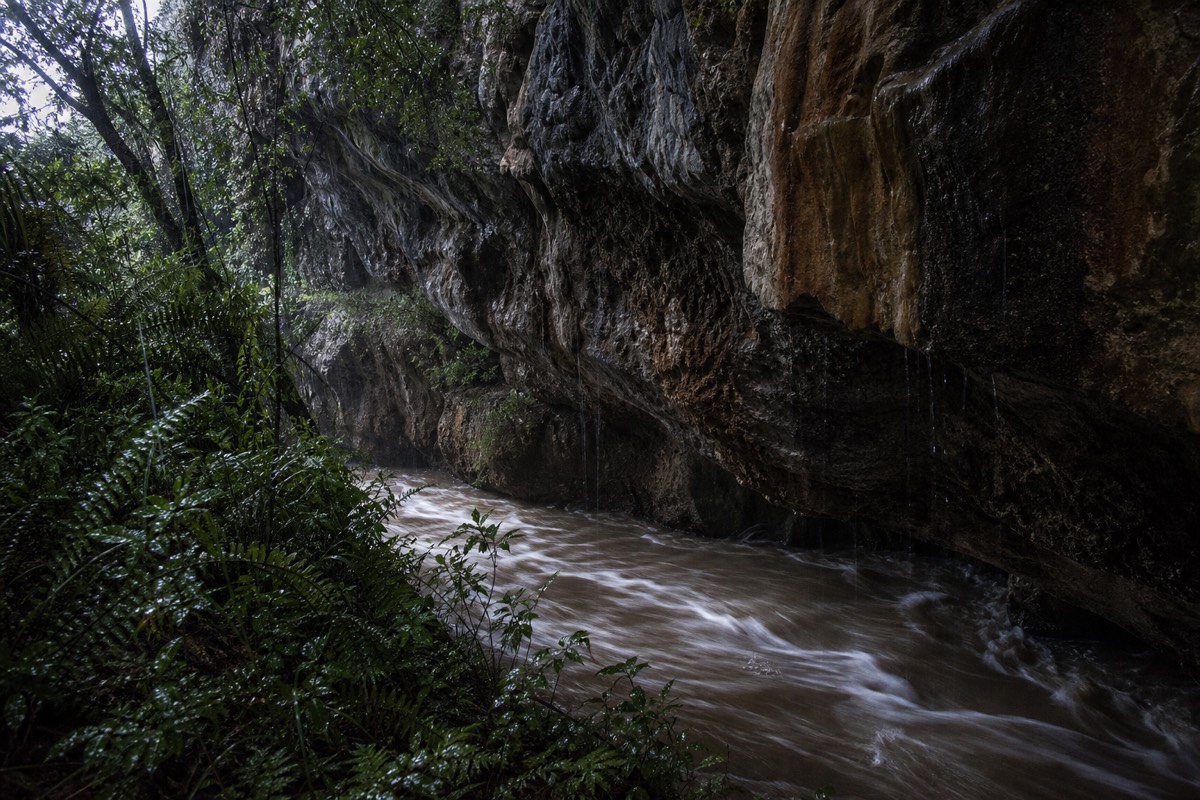
There is a particular kind of holiday morning where you look at the forecast, see solid rain until Thursday, and start rewriting the day. Waitomo is the stop that survives that morning. Fifteen steps into the hill, the weather stops existing.
Does the Waitomo cave tour run in the rain?
Yes, daily, in any weather. The tour departs every 30 minutes from 9am to 5pm and the cave interior holds a constant 16 °C regardless of what is happening above ground. Rain does not cancel it and does not change the display.
That makes it the obvious contingency plan for a wet day in the Waikato, and plenty of people book it exactly for that reason. The glowworms are unaffected too, because Arachnocampa luminosa lives permanently in the cave and glows year round, with brightness tracking how hungry an individual larva is rather than anything in the sky.
| Weather | The cave tour | The drive | The free walks |
|---|---|---|---|
| Dry | Unchanged | Easy | Good |
| Light rain | Unchanged | Fine | Better, everything running |
| Heavy rain | Unchanged, but check operator updates | Slower, wet rural roads | Waterfalls at their best |
| Winter cold | Unchanged, 16 °C inside | Short daylight, dark drive home | Muddy but fine |
What does heavy rain actually affect?
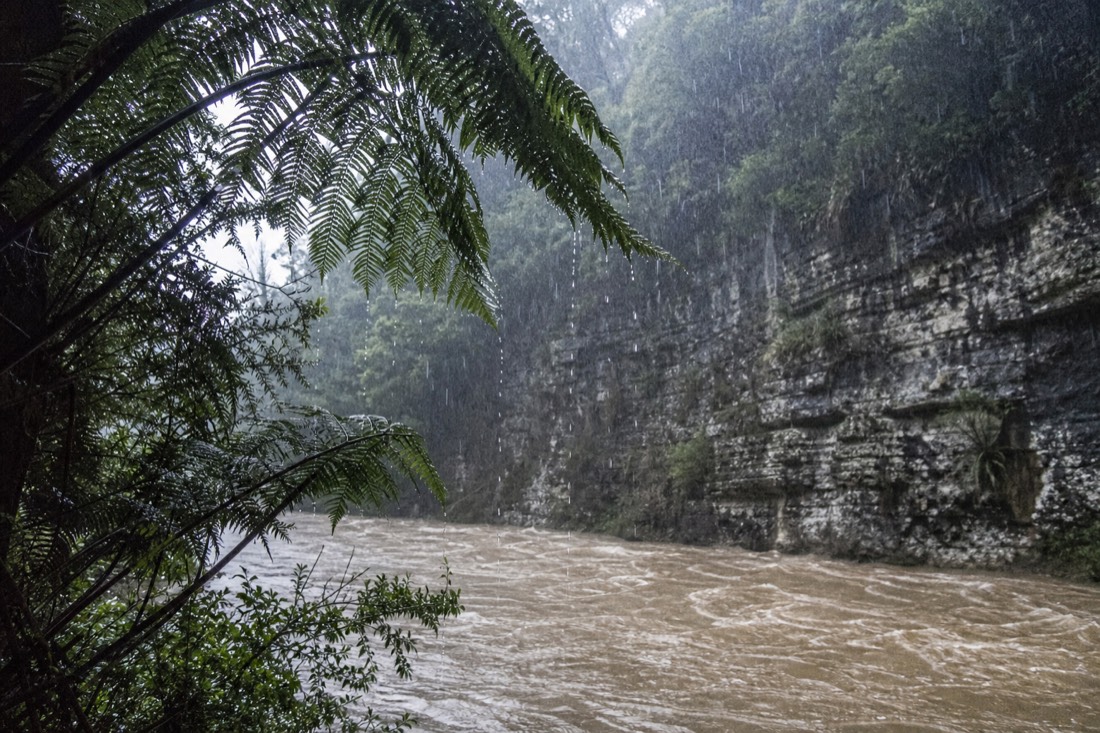
The river, the roads, and how long the drive takes. The Waitomo River runs through the cave and carries the boat on the Grotto section. Sustained heavy rain raises its level, and prolonged wet weather can affect roads and walkways in the district.
None of that is a routine closure, and it is not something to plan around in the ordinary way. It is a reason to check the operator's own updates if the forecast is genuinely severe rather than merely wet. What happens when the river rises covers the mechanics of a cave with a river running through it.
The more mundane effect is on your driving day. Two and a half hours from Auckland becomes closer to three in heavy rain, and the last stretch into the village is narrow rural road. In winter, add short daylight to that: a 3pm cave slot in July means a dark drive home. The Auckland driving guide covers the route.
What gets better in the rain?
The waterfalls, and the whole limestone landscape west of the village. Marokopa Falls drops 35 metres and is at its most impressive with water behind it. The Mangapōhue Natural Bridge, a 17-metre limestone arch on an easy 800-metre return walk, sits in a gully that is greener and louder when it is wet.
This is the genuinely useful thing about a rainy Waitomo day. Most destinations have a wet-weather plan that amounts to a museum. Here, the paid attraction is indoors by definition and the free attractions are better in the rain. What else there is around Waitomo has the distances and the walk times.
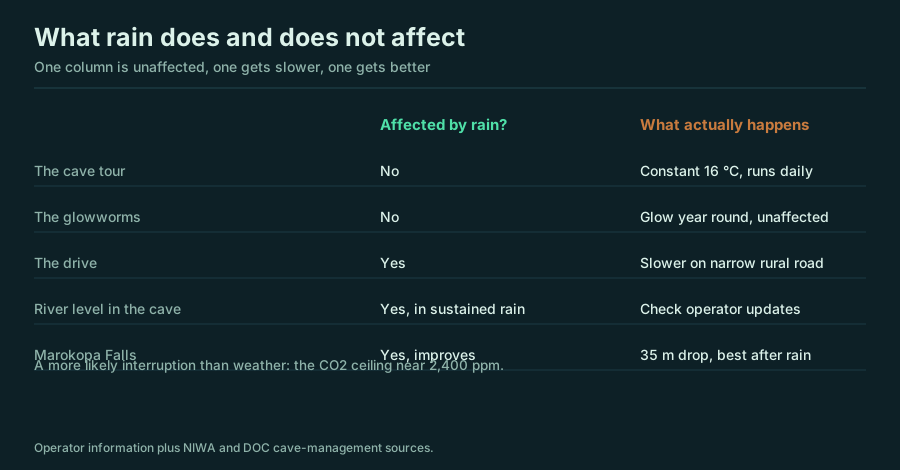
It is worth separating the two things a bad forecast could actually change.
| Concern | Real? | What to do |
|---|---|---|
| The tour will be cancelled | No, it runs daily | Nothing |
| The drive will be slower | Yes | Leave more time, especially in winter dark |
| The river will be high | In sustained heavy rain | Check the operator's updates |
| The glowworms will be dimmer | No | Nothing |
Does the weather affect the glowworms?
Not in any way you will notice. The colony lives in a chamber with a stable temperature and humidity, insulated from everything happening outside. There is no wet-weather dimming, no seasonal fade, and no better month.
What does affect the display, in a small way, is feeding. The larvae eat flying insects that hatch from the stream below them, and a hungrier larva glows more brightly because the light is bait. That is a biological rhythm rather than a meteorological one. The full biology explains how the fishing lines work.
The far more likely interruption to a tour has nothing to do with weather at all. The cave monitors carbon dioxide, temperature and humidity continuously, and tours can stop if the CO2 ceiling of around 2,400 parts per million is reached. How the cave air is managed covers that system.
Should you rebook if the forecast is bad?
No, and there is no reason to. The tour is unaffected, and cancellation is free up to 24 hours before if you decide to change plans for other reasons. That combination means a booked slot in bad weather costs you nothing either way.
If anything, a wet week is the argument for booking rather than against it. Everyone else in the Waikato is making the same calculation, and the indoor attraction with a half-hourly departure schedule fills first. The listing already carries a "likely to sell out" flag.
The 45-minute guided cave tour shows every slot for your date, and you can check live availability and prices on GetYourGuide knowing the weather will not change the experience. The booking and cancellation terms are set out in full separately.
| If your forecast is | Do this |
|---|---|
| Rain all day | Book the cave, add the waterfalls afterwards |
| Heavy rain warnings | Book, but check the operator's updates before driving |
| Cold and clear | Nothing changes underground; the drive is easier |
| Uncertain | Book anyway, cancellation is free to 24 hours out |
Which Waitomo activities does weather actually affect?
The outdoor ones and the driving. Nothing underground. Sorted by exposure, the district's activities split cleanly.
| Activity | Weather-affected? |
|---|---|
| Glowworm Caves tour | No, 16 °C and runs daily |
| Ruakuri and Aranui | No |
| Small-group private cave tours | Largely no; access tracks can be muddy |
| Black water rafting | Cold water either way; sustained heavy rain can affect river levels |
| The road west and the free walks | Yes, and mostly for the better |
| The drive from Auckland | Yes, add time in heavy rain and winter dark |
If your day is already booked underground, a bad forecast is close to irrelevant. If it is built around the free limestone country, a wet day makes the waterfalls better and the tracks muddier.
What is the wet-weather version of a full day?
Almost identical to the dry-weather version, with the order swapped. Do the outdoor stops when the rain eases rather than trying to schedule around it, because the paid part is immune.
| Time | Wet-day plan |
|---|---|
| Morning | Glowworm Caves tour, quietest slot, entirely unaffected |
| Late morning | Ruakuri Cave, another 90 minutes underground and dry |
| Lunch | Te Kuiti or Otorohanga rather than the village |
| Afternoon | Marokopa Falls, which is at its best with water behind it |
| Late afternoon | Mangapōhue Natural Bridge, greener and louder in the wet |
The one thing worth checking is the drive rather than the weather itself. The last stretch into the village is narrow rural road, and heavy rain plus winter daylight turns a 2 h 30 run from Auckland into something closer to three hours in the dark on the way home.
When should you actually change plans?
Only for a severe weather warning, and then it is the roads you are checking rather than the cave. Ordinary New Zealand rain changes nothing about the tour.
| Forecast | Action |
|---|---|
| Rain | None. Book, go, take an umbrella for the car park |
| Heavy rain | None for the tour; allow more driving time |
| Severe weather warning | Check the operator's own updates before setting off |
| Flooding on the route | Check road conditions; the cave is not the constraint |
| Cold snap | Nothing changes at 16 °C underground |
Worth knowing that the likelier interruption has nothing to do with weather at all: the cave manages air quality against a carbon dioxide ceiling near 2,400 parts per million and tours can stop if it is exceeded. That is rare, and it is still more likely than rain closing anything.
What is the wet-day booking pattern?
Everyone else has the same idea, which makes a wet forecast an argument for booking earlier rather than later. The Waikato's indoor attractions fill on bad days, and this one already carries a "likely to sell out" flag.
| Forecast, two days out | What happens to availability |
|---|---|
| Fine | Normal; slots move steadily |
| Rain | Indoor attractions pick up local demand |
| Heavy rain in a holiday period | The worst combination for walk-ups |
| Fine, but a peak weekend | Also bad; season beats weather here |
Since cancellation is free up to 24 hours before, the correct response to an uncertain forecast is to book rather than wait. Waiting to see what the weather does costs you the slot and gains you nothing, because the tour is identical either way.
Does bad weather change the cave at all?
Only the river, and only in sustained heavy rain. The Waitomo River flows through the lower level and carries the boat, so prolonged rainfall raises the water. That is not the same as a closure, and the operator publishes no routine weather-closure policy.
| Element | Affected by rain? |
|---|---|
| Cave temperature | No, a constant 16 °C |
| Glowworm display | No |
| Air quality management | No; that is driven by visitor numbers |
| River level in the lower cave | Yes, in sustained heavy rain |
| Access roads and walkways in the district | Yes, in severe weather |
| The tour schedule | Runs daily |
If a severe weather warning is in force for the Waikato, the operator's own updates are the source to check before driving. Ordinary rain needs no checking at all.
Do the Waitomo caves close in bad weather?
Not routinely. The tour runs daily and the cave holds 16 °C regardless of conditions outside. Severe sustained rain raises the Waitomo River, which flows through the cave, and can affect district roads, so check the operator's own updates if warnings are in force.
Is a rainy day a good day to visit?
Yes, and one of the better ones. The tour is indoors and unaffected, and the free waterfalls and limestone walks west of the village are at their best in the wet. The one downside is that everyone else has the same idea, so book ahead.
Does rain affect the glowworms?
No. The colony lives in a stable environment inside the cave, insulated from weather. Individual brightness varies with how hungry a larva is, since the glow baits its silk fishing lines, but that has nothing to do with the sky.
What about winter?
Winter in the Waikato is wet rather than icy, and the cave sits at 16 °C whatever the month. The real winter considerations are short daylight for the drive home and quieter tours, since May to September is the low season for visitor numbers.
Can a tour be cancelled for other reasons?
Yes. The cave monitors carbon dioxide, temperature and humidity, and tours can stop if the CO2 ceiling of around 2,400 parts per million is exceeded. That is a management measure to protect the cave environment rather than a weather event, and it is far rarer than a wet day.