Hidden gems around Waitomo most visitors drive past
A 17-metre limestone arch, a 35-metre waterfall and a free night circuit with glowworms in it. The half of the district that costs nothing and gets ninety minutes of attention.
 Written with Hemi Williams, Waitomo cave guide and local specialist, guiding since 2015
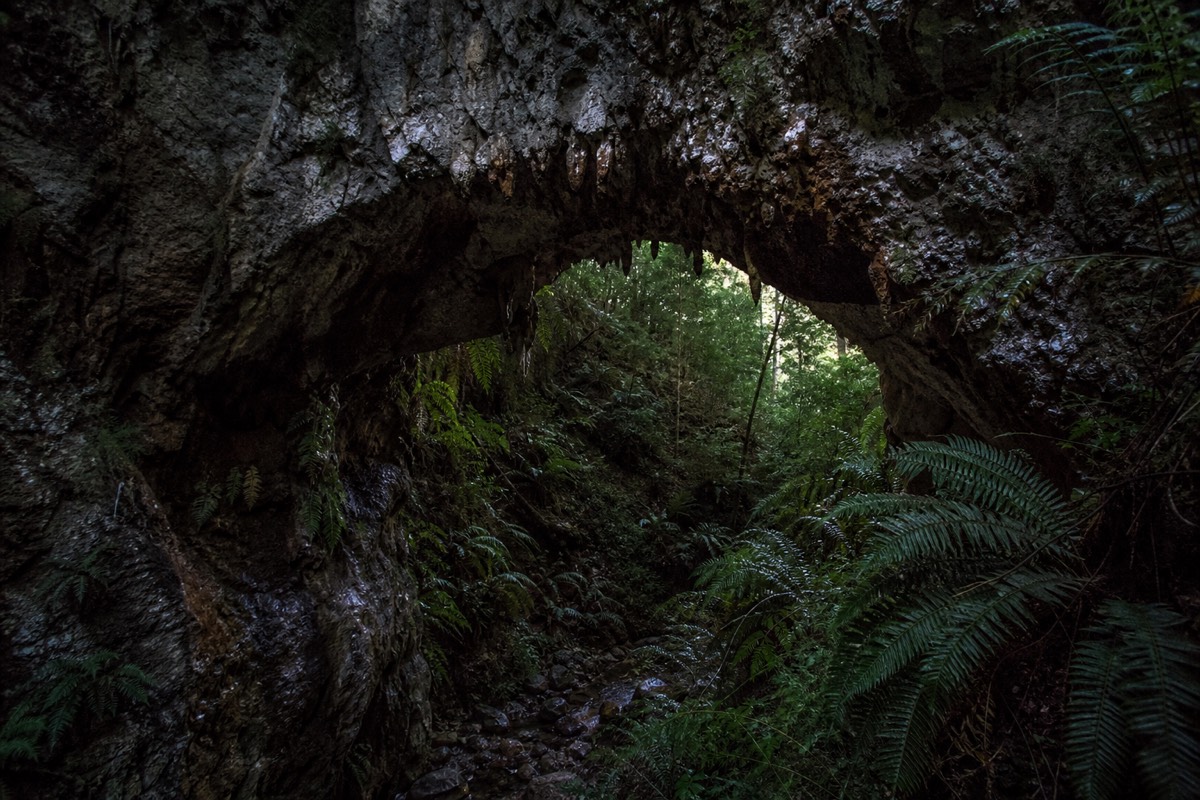
Most visitors to Waitomo arrive, take a 45-minute tour, and leave. The road west out of the village, which runs through the same limestone that made the caves, sees a fraction of that traffic. It has an arch you can walk under, a waterfall you can hear before you see, and a night circuit where the glowworms are free.
What is worth seeing around Waitomo besides the caves?
Three things, all free, all within half an hour of the village: the Ruakuri Bush Walk, the Mangapōhue Natural Bridge and Marokopa Falls. Together they turn a 90-minute cave stop into a full day without adding a single ticket.
The operator's own short-walks page lists all three, which is a slightly unusual thing for a ticketed attraction to do.
| Place | What it is | Time | Distance from the village |
|---|---|---|---|
| Ruakuri Bush Walk | Free circuit through limestone bluffs and a natural tunnel | 45 minutes | ~2 km |
| Mangapōhue Natural Bridge | 17-metre limestone arch, the roof of a collapsed cave | 800 m return, or a 1.2 km loop | ~26 km west |
| Marokopa Falls | 35-metre waterfall | Short track from the road | ~32 km west |
Which is the best one?
The Ruakuri Bush Walk, and it is not close. It runs through limestone bluffs, crosses the river and passes through a short natural tunnel, and it takes about 45 minutes. In daylight it is a good bush walk. After dark, glowworms are visible near the main bridge, in the open, for nothing.
That last point deserves saying loudly, because a lot of people pay for a cave tour and drive away without knowing it exists. It is not a substitute for the Glowworm Grotto, which is a denser display in a chamber you reach by boat. It is an entirely free hour with the same species overhead.
One Viator reviewer who gave the paid tour three stars specifically recommended it instead, writing that "there is a bushwalk nearby which is amazing and you also walk through a cave". She was right, and her review is more useful than most guidebook entries.
What is out west?
Limestone, mostly, and the road is half the point. The Mangapōhue Natural Bridge is a 17-metre arch, the surviving roof of a cave whose walls collapsed, reached by an easy 800-metre return walk or a 1.2-kilometre loop. There are fossil oysters in the rock, which tells you what this country was before it was farmland.
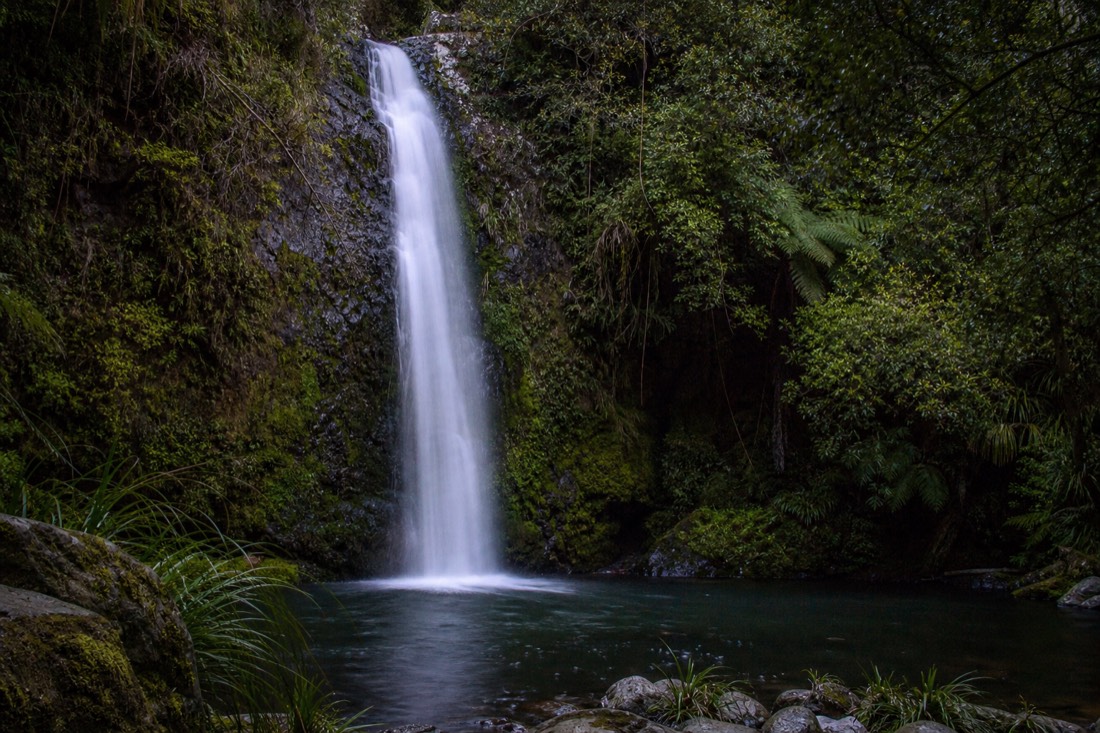
Marokopa Falls drops 35 metres a few minutes further on, off a short track from the road. Both are at their best after rain, which makes them the answer to a wet forecast rather than a casualty of one. What rain actually changes at Waitomo covers that.
The drive out there is narrow, winding and slower than the distances suggest. Allow two hours for both stops including the road, and more if you keep pulling over, which you will.
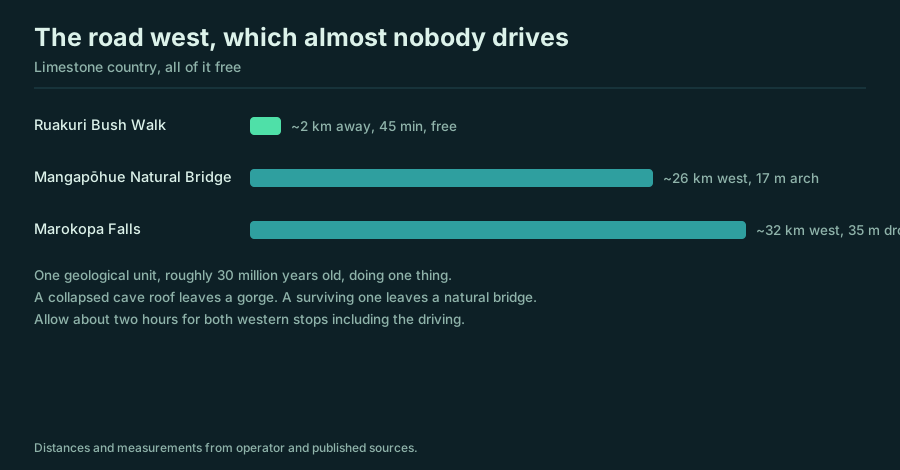
What each stop asks of you before you commit the drive.
| Stop | Walking | Suitable for |
|---|---|---|
| Ruakuri Bush Walk | 45-minute circuit, some steps | Most people; torch needed at night |
| Mangapōhue Natural Bridge | 800 m return, easy | Almost everyone |
| Marokopa Falls | Short track from the road | Almost everyone |
Why does everything look like this?
Because it is all the same rock, doing the same thing. The Waikato limestone here is Oligocene, roughly 30 million years old, laid down when this was seabed. Water has been dissolving it ever since, which produces caves, and when the roof of a cave falls in you get a gorge, and when part of the roof survives you get a natural bridge.
That is why the Mangapōhue arch and the Waitomo caves are the same phenomenon at different stages. It is also why the district has so much of it: one geological unit, one process, thirty million years.
The caves themselves hold about 1,300 metres of passages on two levels in that limestone, and the 1887 survey by flax raft was the first documented attempt to map any of it.
How do you fit it into a day?
Cave in the morning, road west after lunch, bush walk after dark if you are staying. That order works because the cave is quietest early and the outdoor light is better later.
| Time | Plan | Cost |
|---|---|---|
| 9 to 10:30am | The 45-minute cave tour | From NZ$81 |
| 11am to 1pm | Mangapōhue arch and Marokopa Falls | Free |
| 1 to 2pm | Lunch, village or Te Kuiti | Varies |
| 2 to 4pm | Ruakuri Cave, if you want a second cave | NZ$116 |
| After dark | Ruakuri Bush Walk, glowworms in the open | Free |
Everything on that list except the first cave tour needs a car. Ruakuri, Aranui and everything west of the village all require your own transport, which means a coach day trip from Auckland gets you the tour and nothing else here. The driving guide covers what that rules out, and where to stay near the caves covers the overnight that makes the night walk possible.
If the cave is the anchor, the 45-minute guided cave tour is the one that includes the Grotto, and you can check live availability and prices on GetYourGuide with free cancellation up to 24 hours before.
Why does nobody go west?
Because the signage points the other way and the tour buses do not. Waitomo is marketed as a cave stop, and a cave stop is 90 minutes, so the road out towards Marokopa never enters most itineraries.
| Reason | Effect |
|---|---|
| The district is sold as a cave visit | Visitors budget 90 minutes, not half a day |
| Coach day trips cannot detour | No car, no road west |
| The stops are free | Nobody is advertising them |
| The road is slow | Thirty-two kilometres reads as twenty minutes and takes forty |
| No food or fuel out there | Feels further from the village than it is |
The consequence is a limestone landscape with an arch, a gorge and a 35-metre waterfall that stays quiet on days when the cave car park is full.
What is the best free hour in the district?
The Ruakuri Bush Walk after dark, and it is not a close contest. Free, about 45 minutes, roughly 2 kilometres from the village, with glowworms visible near the main bridge.
| Free option | Time | Best for |
|---|---|---|
| Ruakuri Bush Walk, at night | 45 min | Glowworms with nobody rushing you |
| Ruakuri Bush Walk, in daylight | 45 min | Limestone bluffs, a natural tunnel, the river |
| Mangapōhue Natural Bridge | 800 m return | A 17-metre arch and fossil oysters in the rock |
| Marokopa Falls | Short track | 35 metres, best after rain |
What the night walk cannot give you is density: this is a scattered bank of larvae rather than the Grotto's ceiling. What it gives you instead is time, silence and no schedule, which is precisely the thing every critical review of the paid tour is asking for.
Can you see glowworms for free near Waitomo?
Yes. The Ruakuri Bush Walk is a free 45-minute public circuit about 2 kilometres from the village, and glowworms are visible at night near the main bridge. The display is scattered rather than dense, but it costs nothing and needs no booking.
How far west are the natural bridge and the falls?
The Mangapōhue Natural Bridge is roughly 26 kilometres from the village and Marokopa Falls about 32, both on the same road. The driving is narrow and winding, so allow around two hours for both stops including the road.
Are they worth the drive?
If you have half a day, yes. A 17-metre limestone arch and a 35-metre waterfall in native bush, both free, in country most visitors never see. If you only have ninety minutes, take the cave tour and go.
Do you need a car?
For all of it except the main cave tour, yes. Ruakuri and Aranui caves both require your own transport from the village, and everything west of it is a drive. A coach day trip covers the Glowworm Caves and nothing else in the district.
What is the best free thing to do?
The Ruakuri Bush Walk after dark. Free, about 45 minutes, and glowworms visible in the open near the main bridge. A Viator reviewer who was lukewarm about the paid tour recommended it in her review instead, which is a fairly strong endorsement.